
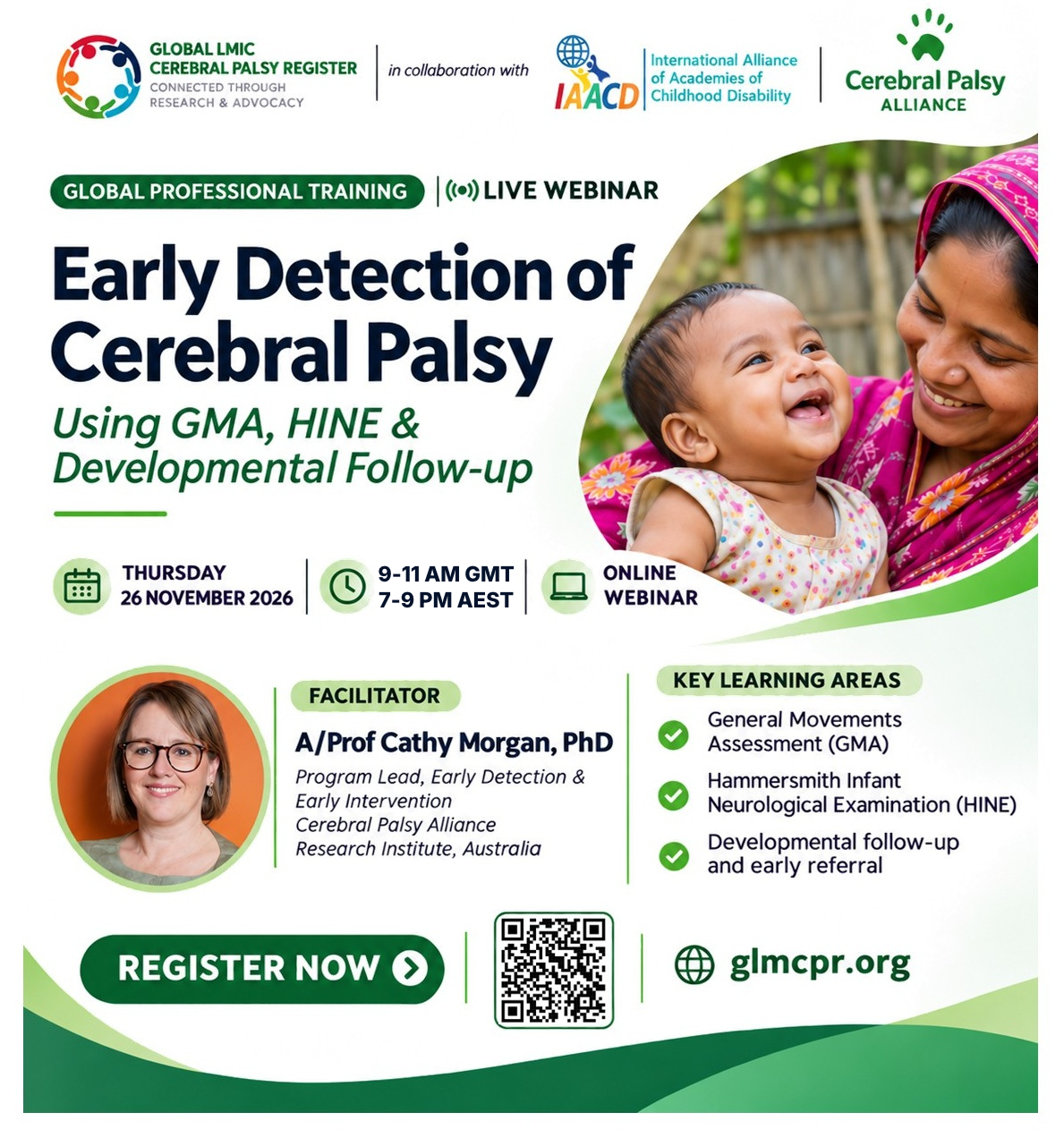
Early detection of CP Webinar event: 26th Nov
Early and accurate identification of infants at risk of cerebral palsy (CP) is essential to enable timely referral and optimise clinical decision-making. Advances in neuroscience and clinical research have established tools such as the General Movements Assessment (GMA), the Hammersmith Infant Neurological Examination (HINE), and structured developmental follow-up as reliable and predictive methods for early detection.
This webinar provides an evidence-based overview of early detection strategies for infants at high risk of CP. Led by A/Prof Cathy Morgan, an internationally recognised leader in early CP detection, the session focuses on the appropriate use, interpretation, and integration of GMA, HINE, and developmental follow-up tools to support early identification and referral pathways, in line with international recommendations.
WHO SHOULD JOIN
Doctors, physiotherapists, occupational therapists, speech and language therapists/speech pathologists, researchers, and primary caregivers.
OBJECTIVE
This training is designed to equip health care professionals with the knowledge and skills required to apply early detection tools, including the General Movements Assessment (GMA), the Hammersmith Infant Neurological Examination (HINE), and developmental follow-up assessments, to identify infants at risk of developing cerebral palsy and to support timely and appropriate referral.
CONTENTS
Evidence supporting early detection of cerebral palsy
Fundamentals of the General Movements Assessment (GMA) and the Hammersmith Infant Neurological Examination (HINE)
Practical considerations for recording and interpreting GMA videos
Developmental follow-up tools, including MOS, DAYC, AIMS, and PDMS
Alignment of early detection practices with international clinical recommendations
LEARNING OUTCOMES
By the end of the session, participants will be able to:
· Understand the evidence supporting early detection of cerebral palsy using GMA, HINE, and developmental follow-up tools
· Describe the strengths, limitations, and predictive value of early detection assessments
· Recognise the clinical and public health implications of early detection for infants at risk of CP
· Appreciate how early identification informs referral pathways and planning for early intervention
· Discuss international recommendations and guidelines for early detection of cerebral palsy